


Researcher cracks new ‘kissing number’ bounds — besting AI in the process

How many coins can touch one coin, or how many basketballs can ‘kiss’ one basketball at the same time? This seemingly playful question lies at the heart of the famous kissing number problem, a mathematical riddle that becomes almost supernaturally difficult to work out in dimensions beyond 4D. Despite its whimsical name, similar problems have practical applications in areas such as mobile communications and satellite navigation.
Aalto University doctoral candidate Mikhail Ganzhinov established three new lower bounds for the kissing number: at least 510 in dimension 10, at least 592 in dimension 11, and at least 1,932 in dimension 14. There had been no movement on the riddle for dimensions below 16 for two decades until earlier this year, when AlphaEvolve, developed by Google's artificial intelligence laboratory DeepMind, in May. It was able to increase the lower bound of dimension 11 to a score of 593. So, only in the 11th dimension did Ganzhinov fall one step short of AlphaEvolve’s AI-powered result.

So how did the researcher beat the AI across the other two dimensions?
‘I reduced the problem size by looking only for arrangements with a high degree of symmetry,’ he explains. ‘In fact, the current lower bound for dimension 11 is still quite weak — I believe it can be pushed well beyond 600.’
Ganzhinov’s thesis advisor, Professor Patric Östergård, is impressed by the outcome — and quick to point out what it says about the limits of AI.
‘Artificial intelligence can do amazing things, but it’s far from omnipotent — and the game may still turn to Mikhail’s favour in dimension 11 too,’ Östergård remarks.
Recently awarded his PhD, Ganzhinov is modest about his achievements, noting that the field is evolving rapidly. Professor Henry Cohn from the MIT and researcher Anqi Li are set to publish that extend the kissing number bounds in dimensions 17 to 21 — the first progress in those dimensions in over 50 years. Ganzhinov says that his results are part of a broader wave of recent developments.
‘This riddle has challenged mathematicians since the famous conversation between Newton and Gregory,’ says Ganzhinov. ‘Yet solving them also has a practical purpose –– understanding connections to spherical codes has real life implications in the field of communications.’
Mikhael Ganzhinov's Doctoral thesis can be found here: .
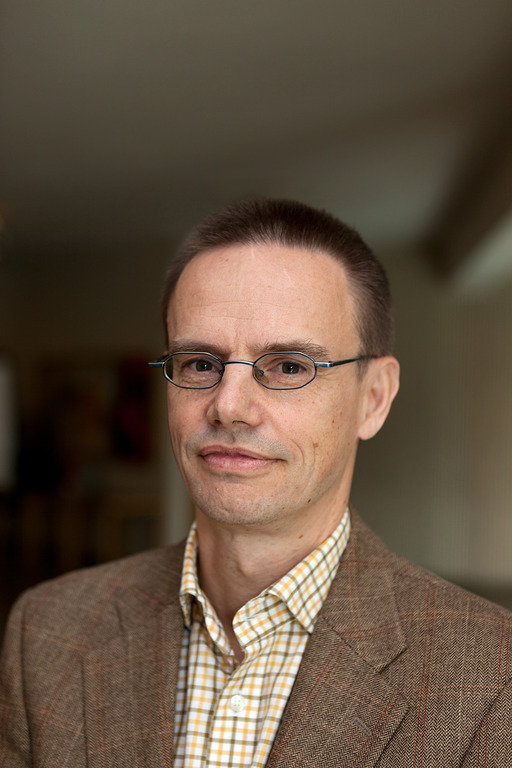
Mikhail Ganzhinov
Read more news

EAA Best Paper and Presentation Award for Young Researchers for postdoctoral researcher Thomas Deppisch
The awarded work shows how speech can be made clearer in noisy environments while still preserving directional cues
Six Aalto’s fields rank among the world’s top 100 in ShanghaiRanking
The comparison assesses research quality and impact, research excellence, international collaboration, academic recognition and leadership
Doctoral thesis: A film director doesn’t just lead the vision – the creative team also needs leadership
Hanna Maylett’s dissertation, to be examined at Aalto University, identifies two intertwined dimensions in a film director’s artistic leadership: the regulation of the work’s content and the social processes within the production team.