


Kimmo Karhu: Platform economy and network effects harnessed for the common good

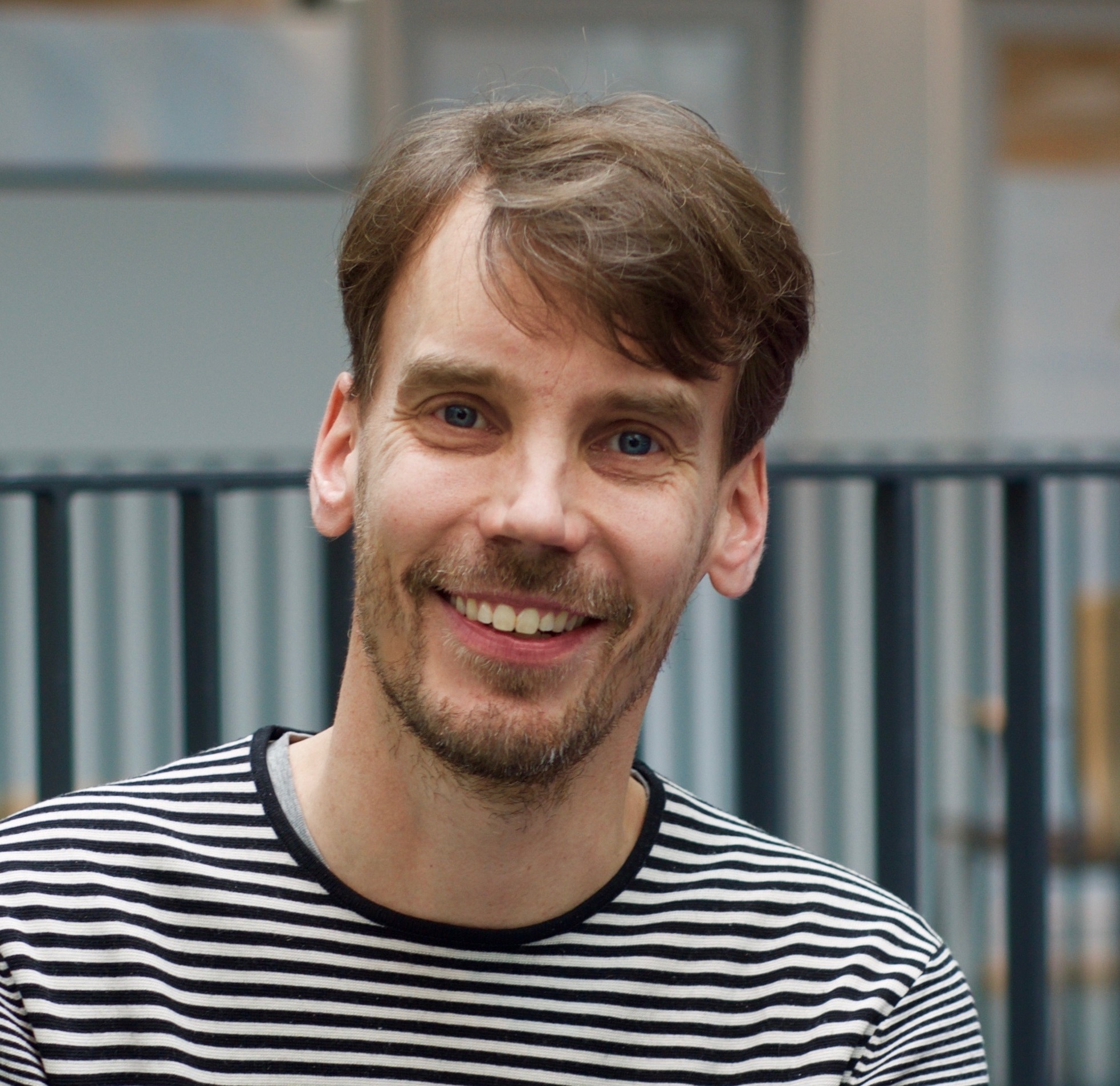
Assistant Professor Kimmo Karhu and his team at the Department of Industrial Engineering and Management are creating a completely new type of modeling in the Green Electrification 2035 hydrogen ecosystem. The researchers are involved in the development of a hydrogen valley around the Baltic Sea in the BalticSeaH2 project, a group of about 40 mainly business actors.
The project launched in the summer is exceptional in many ways, not least because it seeks to use platform economy and network effects to create a hydrogen market.
"The starting point for our research is how to harness the platform economy in contexts other than just digital, such as social media or app innovation. This is a wonderful challenge: how to harness platform economy and network effects to create and accelerate something as truly industrial as a hydrogen market", says Karhu.
The project is interesting also from the perspective of platform economy research, which is dominated by huge global platforms. In this project, the hydrogen market is being built in a limited area around the Baltic Sea. Hydrogen imposes geographical constraints on the market, as it cannot be transferred indefinitely.
"This is very different compared to global digital platforms. I find it interesting that we are not trying to expand this hydrogen market to a huge size, but rather to get the most concentrated and efficient boom in a certain area. So an efficient platform does not have to grow indefinitely, but creating a certain kind of ‘buzz’ in the platform is a value in itself," says Karhu.
Two key ideas are driving the project forward, the first of which relates to the use of data in platforms. Many platforms – Facebook, for example – use huge amounts of data to perform better. Karhu and his team are now looking at whether data could play a different kind of role in the hydrogen market: whether sharing information to others could actually help companies to make the right decisions and thus grow.
“This would create ‘data mediated network effects’ in the market, meaning that the data would help to generate network effect-like growth in the market" Karhu mentions.
Another of the group's key ideas relates to our approach to the platform economy and network effects in general. Kimmo Karhu points out that the platform economy is generally perceived in a negative way, as a result of the winner-take-all dynamics involved, meaning the large platform companies are seen as growing too big, conquering, dominating and subjugating producers precisely because of network effects.
"This is an excellent opportunity to see how platform economy and network effects can be harnessed for a good purpose, so that it would move the market and the whole region towards lower emissions. Because the network effects as such are not a bad thing," Karhu points out.
One of the key questions is how to get different parties involved to share information so that the market is not only efficient, but also steered in a direction that benefits society as a whole. Karhu cites the example of one of the focus areas of the Green Electrification project, Power to X, which is looking for solutions to convert and store electrical energy, for example through hydrogen.
"One of the key themes of the project is sector coupling, as hydrogen can be connected to a wide range of different markets. It also generates various side streams, such as heat from different hydrogen production processes. So how could heat be stored in Finland for heating purposes, for example, or how could carbon dioxide side streams or steam from heat be used in different industrial processes. There are really a lot of opportunities there to exploit such complementarities – and so it's also kind of at the heart of the circular economy," Karhu adds.
But the role of Karhu’s research group in the ecosystem is not about innovations in electricity storage or hydrogen technologies. Their contribution to the project is something quite different:
"We are not trying to be experts in hydrogen technologies, but we are looking at how to harness digitalisation, data and the platform economy to support the hydrogen market. There is this idea of 'platforms for good', that is how the platform and the growth it generates can be channeled for the benefit of society and the region as a whole through a low-carbon economy", Karhu sums up.
Aalto researchers accelerating the green transition in ABB-led programme’s projects
The Green Electrification 2035 programme aims to develop solutions for the green transition.

Strategic corporate partner ABB
Aalto University and ABB cooperate in many different areas, and all six Aalto schools are involved. The cooperation has continued for more than 130 years.

Read more news

Student exchange in Europe? Unite! can take you there
Aalto is a member of Unite!, a European university alliance that gives students the opportunity to internationalise their degrees both online and in-person. Join the webinar to find out more.
Opinion: Finnish language learning should be integrated into degree programs
In this opinion piece, Rebekka Nylund, an expert at the University of Helsinki, and Elisa Räsänen, a university lecturer at Aalto University, reflect on what they have learned from the EU-co-funded Language-supported Knowledge Pathways project and offer suggestions on how and why learning Finnish could be integrated into the structures of higher education degree programs.
What job seeking looks like in the age of AI?
Aalto students map the future for Alma Career