


Research project develops electrically controlled artificial molecular machines

A major new research project at Aalto University sets out to develop artificial molecular machines controlled by electrical fields. Molecular machines are tiny structures that power biological systems such as our bodies. Researchers have long known that the ability to artificially manufacture such machines would have vast potential for nanotechnology and lead, for instance, to much more precise medical diagnostics and more effective therapy. So far, however, real-world applications are still a long way off.
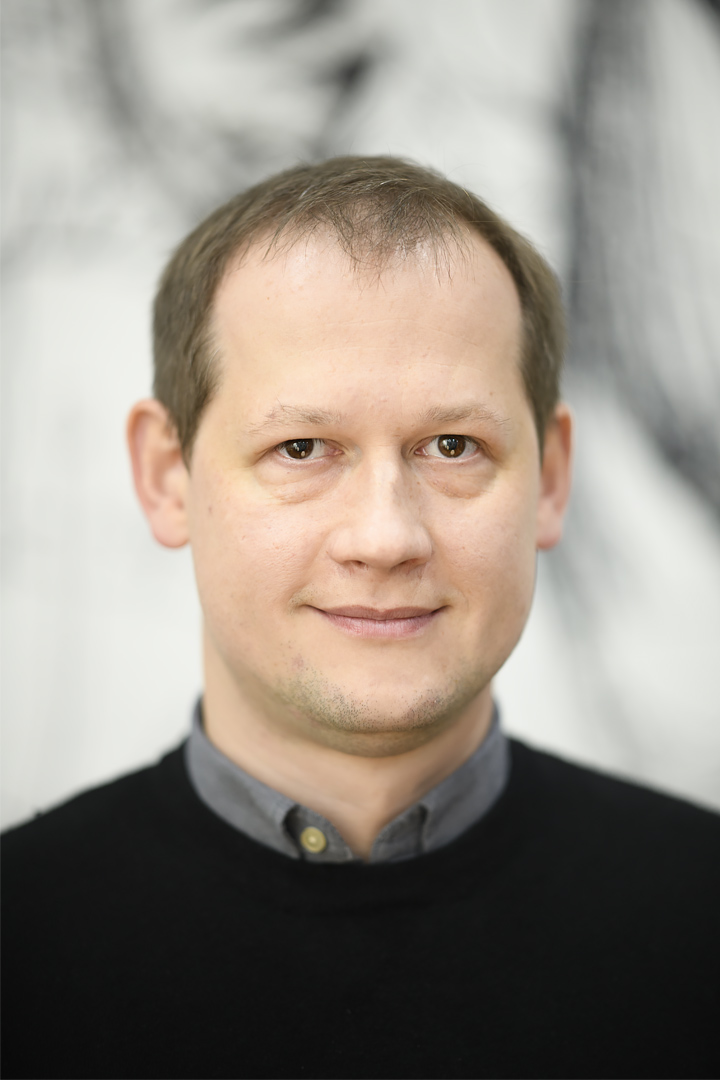
‘The problem is, how do you control things that are organized on such a very small scale? You cannot just take tweezers and move the components around, so you have to design some kind of a control scheme,’ Associate Professor Anton Kuzyk explains.
A majority of demonstrated artificial molecular machines are controlled by applying chemicals to, or shining light on, the structures. Kuzyk’s project turns to electrical fields instead. Electronically controlled molecular machines would be faster as well as easier to manufacture, as they would not need to rely on sophisticated chemical synthesis.
‘An additional benefit of using electrical fields is that one can control molecular machines remotely, simply by pressing a button’ Kuzyk says.
Although some research on electrically controlled molecular machines exists, the field remains largely unexplored. Recently, Kuzyk himself has studied the way that light can be used for the remote control of synthetic DNA-based nanostructures. The present project builds on a similar methodology, but will develop a novel control mechanism.
‘This will hopefully establish a new route for building functional nanoscale reconfigurable molecular assemblies,’ Kuzyk says.
Although applications are not topical yet, Kuzyk mentions the development of ultra sensitive detection techniques for diagnostics as one possible field that the new research could contribute to, and faster and more robust plasmonics displays as another.
Kuzyk emphasizes, though, that at this point we can only speculate about specific applications.
‘A lot of the motivation for this research comes from looking at how biological systems function, from these amazing natural molecular machines that we know are incredibly useful. We still don’t know how artificial analogues should be built and, frankly, what they should do -- we are just learning the first construction principles. Later, we will have a better idea of what functionality can come out of this’.
The five-year project has just received a European Research Council funding of approximately 2 million euros.
Read more:

Read more news

What does ‘quantum’ mean?
Two quantum researchers at Aalto University explain how the seemingly impossible becomes a part of everyday reality.
Samu Taulu develops next-generation brain imaging methods
Associate Professor of neurostimulation and neuroimaging Samu Taulu develops more precise methods for understanding the brain
EAA Best Paper and Presentation Award for Young Researchers for postdoctoral researcher Thomas Deppisch
The awarded work shows how speech can be made clearer in noisy environments while still preserving directional cues